Matt Metras, a fellow tax professional, shared a chart on X (formerly Twitter) noting IRS personnel cuts by function between January 25, 2025 and December 18, 2025:
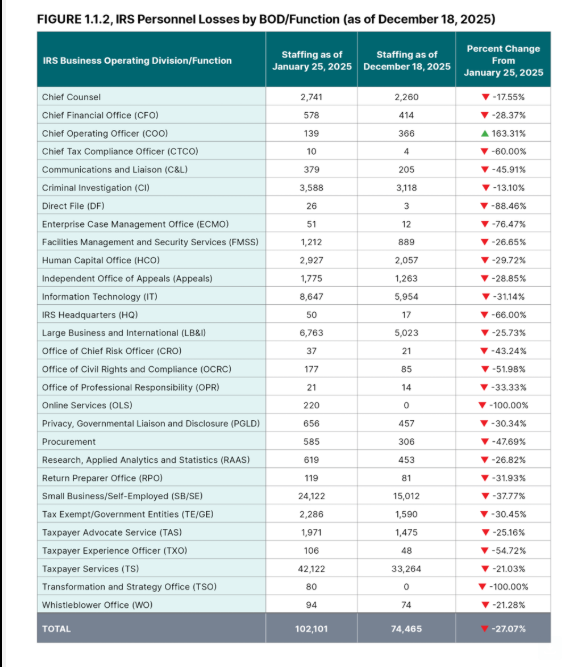
I’ll take just three areas that I regularly deal with: Taxpayer Advocate Service (TAS), Taxpayer Services, and Information Technology. (Overall, staffing is down by over 27%.)
Taxpayer Advocate Service: Staffing at the Taxpayer Advocate Service is down by over 25%. TAS is where taxpayers (and practitioners) go when problems at the IRS cannot be resolved through normal methods. We’re seeing more and more such issues, yet due to staffing cuts (a) all TAS submissions must be done in writing (using IRS Form 911)–phone calls are no longer accepted, (b) because of the cuts it’s clear that TAS will take fewer cases (with a result I’m going to note below), and (c) such cases will take far longer to be resolved.
What’s the result going to be from this? Fewer taxpayers are going to get cases resolved, more taxpayers will need to go to Congressional liaisons (which will also decrease normal TAS cases), and both taxpayers and practitioners will be frustrated.
Taxpayer Services: Staffing at Taxpayer Services is down over 21%. This means fewer phone calls will be answered (more courtesy disconnects, where you hear the words, “We’re sorry, but due to extremely high demand in the topic you chose we cannot answer your call at this time; goodbye”), leading to more call volume, more letters/uploads that will have to be responded to, and a degradation of service. Additionally, expect the response time on IRS notices to lengthen–likely significantly. Returns will be processed slower, costing the government money (if a refund takes 45 days or longer to be processed, interest must be paid).
Information Technology: Last night, I spoke with my brother. He didn’t initially believe me when I told him a main IRS computer system dates to 1959 (it’s true). IT staffing is down over 31%. Does anyone think that cutting IT staffing makes sense when the IRS needs to have more modern computer systems, have systems that keep up with new tax law, and have to effectively administer the tax system?
Let’s add a budget cut to the IRS of $11 billion and a possible government shutdown. This is a toxic mess that is likely to lead to frustrated taxpayers and professionals. This will also lead to practitioners getting more phone calls from clients where we have to tell clients, “Unfortunately, there’s nothing we can do.”
